
At least 187 evacuees from the Great East Japan Earthquake remain in Okinawa as the nation marked the eleventh anniversary of the devastating disaster. In total, an estimated 39,000 people forced to leave their homes in the aftermath of the earthquake continue to live away from the affected region.
The 9.0-magnitude earthquake had its epicentre in the Pacific Ocean, 72 km off the north-east of Japan, on March 11, 2011. This was the most powerful recorded earthquake in Japan’s history and following the tremors a tsunami measuring up to 40 meters, according to some estimates, swept along the east coast.
Whole towns were destroyed and thousands of lives lost as the waves hit. The natural disaster led to a Level 7 nuclear accident (the highest rating) at the Fukishima Daichi Nuclear Power Plant. This was the same ranking as the accident at Chernobyl, Ukraine, in 1986, in an area that consequently still remains largely uninhabited.
As a combined impact of the earthquake and power plant disasters, almost 20,000 people lost their lives with more than 2,000 still unaccounted for. At the height of the region’s diaspora more than 470,000 people were said to have evacuated and moved to towns and cities across Japan, with a 2013 high of 1,062 in Okinawa.
However, the true number of internal refugees caused by the disaster is unknown as figures rely on evacuees self-reporting. In the past decade many from Tohoku have built new lives elsewhere in Japan, with a younger generation being more familiar with their new home than the place of their birth.
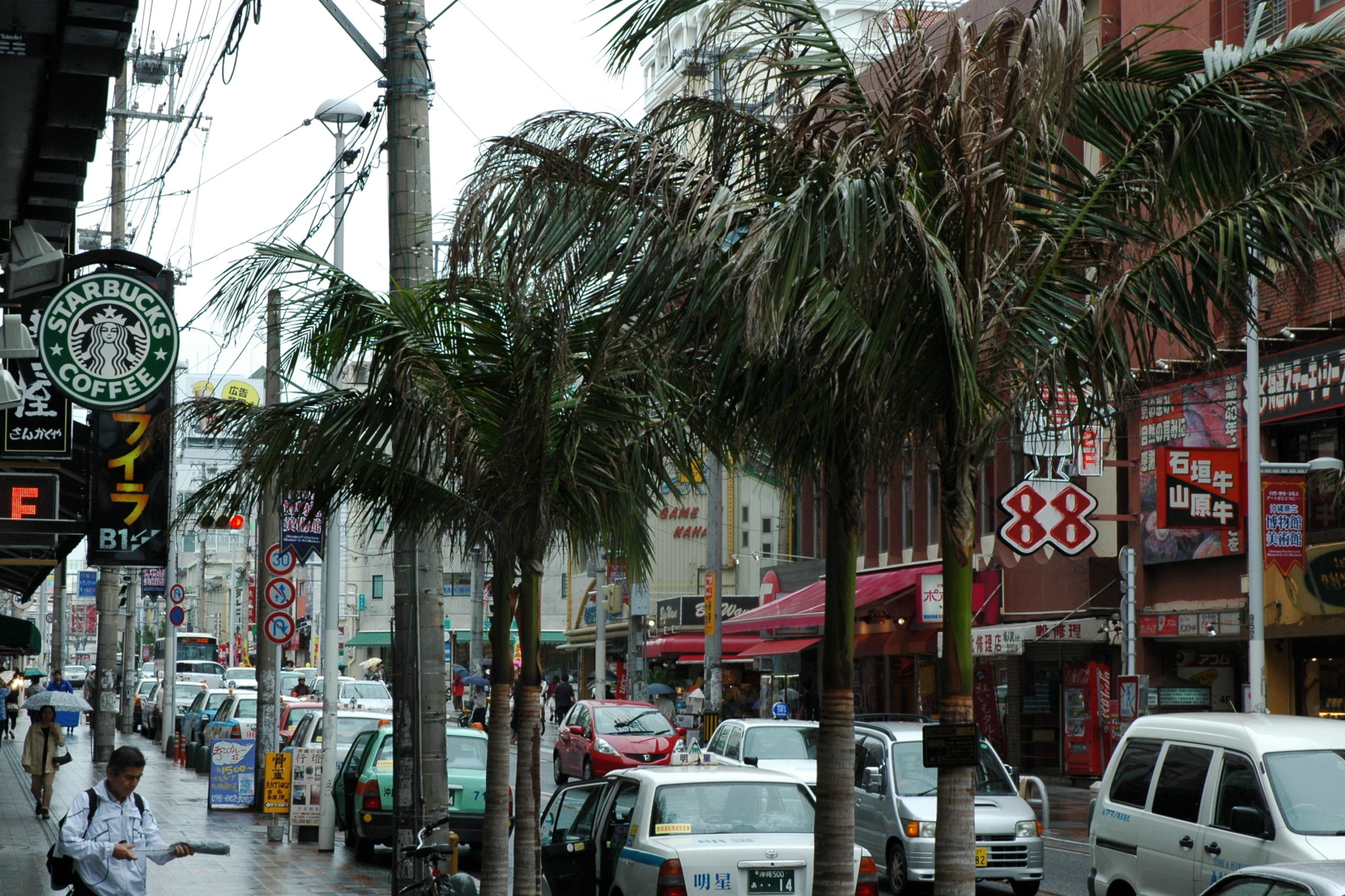
Picture shows Kokusai-dori, Naha, the capital of Okinawa prefecture – ‘home’ to 187 Tohoku evacuees
